

Why Querétaro Is Becoming One of Mexico’s Most Important Nearshoring Hubs
A few years ago, many international executives barely knew where Querétaro was. Today, it is becoming one of the most strategic business destinations in Mexico. Global companies are expanding operations here. Industrial parks continue growing. International talent is arriving. And HR teams are increasingly facing a new challenge: How do you relocate people successfully into a fast-growing Mexican market without losing productivity, stability, or talent retention?
Because nearshoring is no longer just a manufacturing trend. It is becoming a human mobility challenge. And Querétaro sits directly at the center of it.
Why Companies Are Looking Beyond Mexico City
For years, Mexico City dominated international business expansion conversations. But companies increasingly began facing challenges related to congestion, rising operational costs, long commute times, infrastructure pressure, and employee burnout.
At the same time, organizations wanted locations that still offered strong connectivity, international schools, modern healthcare, bilingual talent, and operational stability. Querétaro started checking all those boxes. And importantly, it offered something many larger cities struggle to maintain: balance.
Querétaro’s Strategic Location Matters More Than People Realize
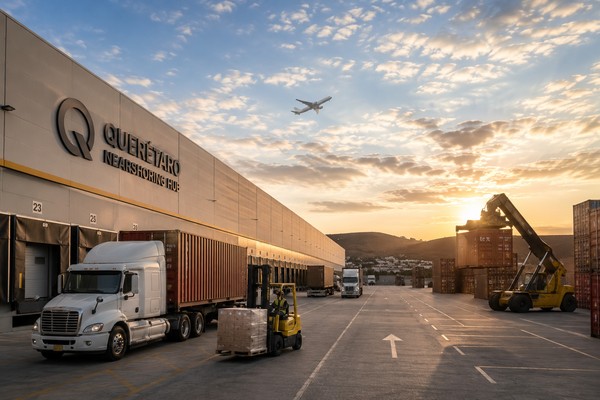
One of Querétaro’s biggest advantages is geography. The city is not only right in the middle of the country, it sits within one of the most economically important corridors in the country, with strong connectivity to Mexico City, Guanajuato, San Luis Potosí, Monterrey, and key industrial regions. For logistics, manufacturing, aerospace, automotive, and technology companies, this positioning is extremely valuable.
But what often surprises foreign executives is that Querétaro does not feel purely industrial. Unlike some heavily manufacturing-focused cities, Querétaro combines:
- Corporate growth
- Modern infrastructure
- Colonial charm
- International communities
- Relatively high quality of life inside a more manageable urban environment.
That combination is rare.
Nearshoring Is Creating a New Kind of Relocation
This is where the conversation becomes much more human. When companies move operations to North America, they are not simply moving factories. They are moving executives, engineers, technical specialists, operations managers, and increasingly, entire families. And relocation success depends on much more than visas and contracts.
Employees now ask questions like:
- Is the city safe?
- Can my children adapt?
- What are the schools like?
- How difficult is daily life?
- Do I need a car?
- Is healthcare reliable?
- Will my spouse feel isolated?
- Can we realistically build a life there?
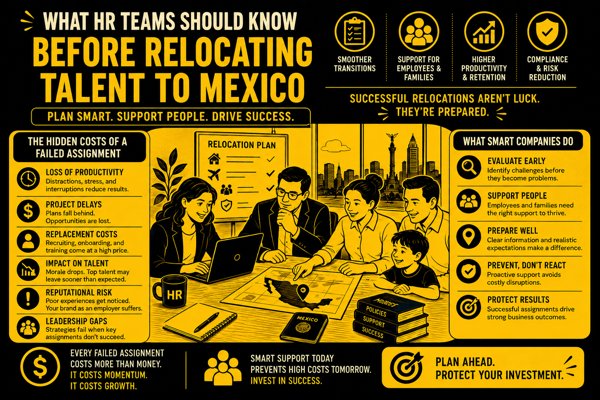
These questions directly affect retention, productivity, morale, and assignment success.

Why HR Teams Are Paying More Attention to Integration
This is one of the biggest shifts happening globally. Relocation used to focus mostly on logistics: flights, housing, contracts, and immigration paperwork. Now companies increasingly understand that failed adaptation is expensive. An employee who struggles emotionally or practically during relocation may experience: stress, reduced productivity, family tension, or early assignment termination.
That is why many HR leaders are shifting toward a broader global mobility approach that includes:
- Cultural adaptation
- Family support
- School orientation
- Healthcare navigation
- Long-term integration
And honestly, Mexico can feel much easier (or much harder) depending on how supported someone feels during those first months.
Why Querétaro Fits International Families Particularly Well
One reason Querétaro performs especially well in global mobility is that it tends to work for entire households, not just employees.
The city offers:
- International schools
- Modern private healthcare
- Family-oriented neighborhoods
- Growing international communities
- A pace of life that many foreigners find more sustainable long term
For professionals arriving from the United States, Canada, Europe, or Asia, Querétaro often feels more manageable than larger Latin American cities while still offering strong economic opportunity. And unlike purely retirement-oriented destinations, the city continues attracting younger professionals, multinational companies, entrepreneurs, and globally mobile talent. That creates a more dynamic ecosystem.
The Human Side of Nearshoring
This part is often underestimated. Behind every nearshoring project are real people trying to rebuild daily life in a new country.
The success of international expansion increasingly depends on questions that are deeply personal:
- Does the family feel stable?
- Can the employee adapt culturally?
- Does daily life feel sustainable?
- Can they imagine staying long term?
Because relocation is never purely operational. It is emotional too. And cities that support both business growth and quality of life are becoming increasingly valuable globally.
Final Thoughts
Nearshoring is transforming Mexico. But the cities that benefit most will not necessarily be the cheapest ones. They will be the ones capable of supporting business growth, international talent, and long-term human integration simultaneously.
That is exactly where Querétaro is positioning itself. And for many companies, the question is no longer: “Why Querétaro?” It is: “How quickly can we adapt before everyone else arrives?”
Where Nexterra Comes In
We help companies, executives, remote professionals, and international families navigate the real-life side of relocation and global mobility in Central Mexico. From neighborhood orientation, housing support, and school guidance to healthcare navigation, cultural adaptation, and long-term integration, our goal is simple: Help people relocate successfully, not just operationally, but humanly. Because successful nearshoring depends on people, not only infrastructure.
Next steps:
Why International Relocation Assignments Fail (And How Companies Can Prevent It)
Global Mobility Challenges in Mexico: What Companies Often Underestimate
The Hidden Cost of Employee Relocation Failure: What Companies Often Miss
How Family Integration Impacts International Assignment Success